Showing posts with label civil war. Show all posts

30 April 2010

Sudanese Elections: Backstory and Future Prospects


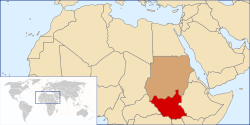
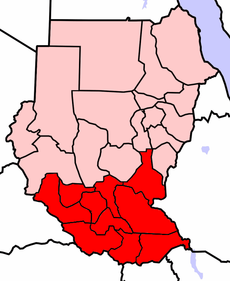
Awesome noted on the blog earlier this week that indicted international war criminal/president Omal al-Bashir won reelection and that Salva Kiir had similarly cruised to reelection as vice president and (thus) president of the Autonomous Government of Southern Sudan. I've followed this election somewhat closely and wanted to throw in my $.02 on the situation in Sudan.

First, the elections were pretty much a sham. Go over to the Enough Project and read all about the abuses and irregularities perpetrated by the ruling party (or watch videos of the vote being rigged) or go read about all of the problems with the process listed by the Carter Center.

However, no one is making much of a fuss over this because...

a) Most of the opposition candidates did not participate, so there weren't really many choices for voters. This includes the candidate that was going to be put forward by the leading party in the South, the SLPA/M. The calculus by the SLPM seems to be...what's the point? Why worry about national elections when we are just going to secede next year?

b) As far as I can tell, the US and other Western governments seem to have made similar calculations--something like: yes, we could raise a big stink over these elections, but we want to stay on Bashir's good side in order to have at least a shot at a peaceful secession process next year (it seems fairly certain that the South will vote to secede).

There are a couple of problems with this prognosis by Southern Sudan and by the West. First, it presumes that Bashir will follow through with a fair referendum process next year and, if the South votes to secede, he will allow them to do so peacefully. This seems wildly optimistic given his past antics and the fact that huge issues such as border demarcation and oil revenues remain unresolved. For its part, Southern Sudan seems to be hedging its bets in order to force Bashir to think long and hard before trying to re-ignite the North-South Civil War that raged from the 80s all the way up until the CPA in '05.

But even assuming all goes as planned, a newly independent Southern Sudan faces seemingly insurmountable development obstacles including:
-crushing poverty (I've heard estimates that it would be the poorest country in the world)
-sporadic but deadly intercommunal violence
-periodic incursions by the Lord's Resistance Army
-landlocked with (mostly) bad neighbors, including Bashir's state, whose proximity will likely lead to very high military spending by the new state
-resource curse problems (with oil)
-likelihood of a one-party state dominated by the SPLA/M

14 April 2010

The Critics of Confederate History Month Are Right

Over at Down From the Mountain, a buddy of mine takes on the issue of Governor McDonnell's recent proclamation of Confederate Heritage Month in Virginia and the surrounding controversy. While John criticizes the short shrift that the governor gave slavery in the proclamation, he feels that the media fallout from the controversy was unfair to the South and to southerners and that, generally, liberals (which I am) and northerners (which I'm not) more broadly are unfair toward and dismissive of the South and southerners. He also attempts to dispel the idea that the South was the "bad guy" in the US Civil War. Herein, I take issue with several of his main contentions.

First, he accepts arguendo the common refrain that the South is "still fighting the Civil War" but claims that the North is "insistent on pushing their view" today. First, I would argue that attempting to correct the views of pro-Confederate historical revisionists who attempt to downplay the role that slavery played in motivating secession is less "pushing one's view" than "maintaining the accuracy of the historical record." Second, for most of the post-bellum period, the South has LITERALLY STILL BEEN FIGHTING THE CIVIL WAR. This began with concerted low-level campaigns of terrorist violence for nearly a century after the end of Reconstruction and later morphed into the "massive resistance" to Civil Rights legislation and desegregation.

Second, while he acknowledges that southern military leaders were highly supportive of slavery (and doesn't, as far as I can tell, argue that slavery was not the main motivating factor for secession), he argues that most rank and file southern soldiers were motivated by other factors, since only the elites were slaveowners in the antebellum South.

While this is certainly the case, people don't generally engage in this sort of celebration for other extremely questionable causes on this basis. Many soldiers in the Imperial Japanese Army were probably swell guys and just fighting out of a sense of nationalism but Japan isn't having a remebrance month for the Tojo regime. Hell, most of the fighters in Joseph Kony's murderous LRA are just abducted child soldiers but I don't think Uganda, the DRC, South Sudan, or the Central African Republic will be holding Lord's Resistance Army Day anytime soon or that their citizens will go driving around with LRA flags (if they had them) on their pickup trucks. And to be clear, McDonnell wasn't declaring "Confederate Soldier History Month" or "Civil War History Month," it was Confederate History Month.

(As an aside, as far as the motivation of rank and file soldiers throughout history goes, I think Debs pretty much nailed it in the Canton, Ohio speech:

The feudal barons of the Middle Ages...declared all wars. And their miserable serfs fought all the battles. The poor, ignorant serfs had been taught to revere their masters; to believe that when their masters declared war upon one another, it was their patriotic duty to fall upon one another and to cut one another’s throats for the profit and glory of the lords and barons who held them in contempt. And that is war in a nutshell.
)

A few other points. As Dr. Farley asks, why does "Southern History" have to be about the four years in which the region waged a treasonous war in defense of slavery rather than the other 230 years of its existence? Further, why does it have to be about the group of people who fought against the United States Government and not say, the huge chunk of people (a majority in some states) that the rebels wished to keep enslaved or the areas or individuals that remained loyal to the country?

John closes with what I think is the weakest segment of his post:

The CIA refers to the fallout of reconstruction as 'blowback.' For those who are unfamiliar with the term, it is the result of concerted military/propaganda efforts to shift the cultural, political, or social leanings of a state. And blowback there has been. The reaction to reconstruction and further oppression was violent resistance that lasts to this very day. So yes Mr. CNN bigshot, much like our interference in Afghanistan during their war with the Soviets.


Blowback is usually used to refer to the unintended consequences of a covert action, not of reconstruction. He misuses the term here. First, there was certainly nothing covert about Lincoln et al.'s crushing of the rebellion. Second, blowback is generally something surprising or unforeseen (e.g. we didn't know that helping Ethiopia overthrow the Islamic Courts Union in Somalia would lead to the rise of the far worse Al-Shabab). The southern reaction to Reconstruction was completely foreseeable, which is why the Radical Republicans in Congress enacted such sweeping measures. The reason that southerners were able to "continue fighting" the war (as noted above) is because that Reconstruction program ended following the Compromise of 1877.

12 January 2010

Another Step Toward Unraveling in the Niger Delta


I've written about the possibility of renewed conflict in the Niger Delta a couple of times in the past. My last post on the topic was quite recent and was related to an attack by Delta militants on an oil facility in the region. This was one of MEND's (and related groups') principle M.O. when the conflict was in full swing, so the recent attack was a bad portent for the likelihood of continued peace in the region along with the fact that MEND said that it had "sanctioned" the attack.

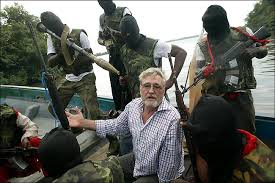
Well, the other principle M.O. for Delta militants was kidnapping oil company employees. And today's news out of Nigeria is, yep, you guessed it, that 3 Britons and 1 Colombian employed by Shell Oil have been kidnapped on their way to work in the Delta. A Nigerian who was guarding them was killed in the course of the kidnapping (it says a lot about the working conditions of oil workers in the region that they have to have armed escorts to get to work).

Hopefully, these two attacks are just a blip and not a sign of worse things to come.

As I wrote about in my last post, much of the current spike in tension is related to the health situation of President Yar'Adua. Today's hopeful news is that the president, who has been incommunicado for some time now in a Saudi Arabia medical facility, finally broke his silence in an interview with the BBC:

At the moment I am undergoing treatment, and I'm getting better from the treatment. I hope that very soon there will be tremendous progress, which will allow me to get back home.

11 January 2010

AEI: Applying the Lessons of Colombia to Afghanistan


One of the things I've been trying to do more lately is to seriously read and engage the ideas of people and/or groups that I generally disagree with. The American Enterprise Institute has generally been one of those entities because, from my experience, they have generally pushed a military force uber alles approach to foreign policy. That's why I was surprised to read this article from their journal on how COIN lessons taken from the success that Colombia has seen in combating FARC and ELN could be applied to the current situation in Afghanistan.

What surprised me about the article was its minimalist approach. In the past, neoconservative outlets such as AEI have almost invariably advocated a maximalist, all-in, send 8 jillion US troops approach to any given conflict or problem. However, the author of this piece, Haddick, soberly analyzes the similarities and differences between the two conflicts and makes reasonable conclusions regarding applicable lessons that could be applied to the situation.

And here's the kicker...the recommendations are actually quite limited and modest! Haddick recommends an emphasis on quality over quantity in building up Afghan security forces, since this approach worked well against the Colombian insurgents. He also recommends emphasizing helicopters in security assistance to Afghan security forces due to the rough terrain (again, something that worked well for Colombian forces in the rough terrain that they fought in). Finally, he recommends working to develop local security forces since potential soldiers are often loathe to serve far away from their homes.

All of these recommendations are sensible, and the great part is that they don't really require any massive commitment of treasure or personnel on the part of Western governments (although of course the helicopters could be expensive). Score one for the neocon think tank.

10 January 2010

Nigeria on the Brink

While the lion's share of media coverage of Nigeria as of late has been focused on the Fruit of the Loom Bomber, the possibility of renewed conflict in the Niger Delta (and the fact that the region's troubles have been keeping about 1/3 of the country's revenues off of global oil markets) is a much more significant threat to regional and international security than terrorism originating from Nigeria. When I wrote my last post on Nigeria in mid-December, the fragile ceasefire between Abuja and MEND, the umbrella organization for Delta militant groups, was growing increasingly precarious and MEND has reportedly attacked a pipeline in the region as a warning to the government.

Well, it hasn't gotten better since then. Yesterday, a Chevron pipeline was attacked by unidentified gunmen in the Delta region. While MEND hasn't claimed responsibility for the raid, the group does say that it sanctioned the attack. These types of attacks on oil industry facilities were occurring with great regularity this past summer during the height of an offensive by the government's Delta Joint Task Force. The attacks had basically halted completely since the ceasefire (accompanied by an amnesty for militants) went into effect around the summer's end.

One of major factors exacerbating tensions here, which I alluded to in the last post but didn't discuss in detail, is the health of President Yar'Adua. To put it succinctly, it isn't really clear whether the president is actually alive and, if he is, whether he is actually well enough to run the country. It seems to be basically common knowledge in Nigeria that Yar'Adua is quite sickly. He has been receiving medical care in Saudi Arabia and hasn't appeared in public for some time now, leading to, as one might expect, all sorts of speculation, including claims that his signature has been forged on official documents.

What does Yar'Adua's health have to do with conflict in the Delta? Many of the recent peace negotiations between the government and militant groups are centered around personal assurances and promises from Yar'Adua. As the uncertainty surrounding Yar'Adua has increased, MEND has become increasingly skeptical of government promises and stepped up its hostility.

Yar'Adua's health predicament also has the potential of creating a national ethno-religious dilemma. Since its transition away from military rule in 1999, Nigeria has alternated between Southern Christian and Northern Muslim presidents (Yar'Adua is a Northern Muslim; the previous president, Obasanjo, was a Southern Christian). Yar'Adua's death would turn the presidency over the VP, the awesomely-named Goodluck Jonathan, and the Northern Muslims would lose much of their "turn" in charge.

08 January 2010

The Most Interesting Election in the World, 2010


While Barefoot and Progressive may well be right that the 2010 Kentucky Senate race is the most entertaining election in the United States this year, the most interesting election from an international standpoint may be this year's presidential election in Sri Lanka.

This election will be historic for a number of reasons. First, it will be the first presidential election since the end of the civil war and the defeat of the Tamil Tigers last May. The Tigers' insurgency had raged for over 25 years and was finally brought to a close by a brutal government offensive in 2009. Many Tamils are still languishing in IDP camps and this election will have a major impact on the course of national ethnic reconciliation going forward.

Second, the personalities involved are incredibly large. The election is going to pit incumbent President Mahinda Rajapaksa, the president who presided over the defeat of the Tigers, against Sarath Fonseka, the general who led the operations that defeated the Tigers and, according to India's Defense Minister, the "best army commander in the world."

The two Sri Lankan heavyweights have, predictably, begun to snipe at each other over who really deserves credit for the victory. General Fonseka has also criticized Rajapaksa's foot dragging on national reconciliation following the Tigers' defeat. This has created some odd political dynamics. For his part, President Rajapaksa has remained aligned with relatively anti-Tamil Sinhalese nationalist political elements. This has led Fonseka to align himself with Tamil and pro-Tamil political elements in the country. So you have the general who led the operation that was, by almost all accounts, a humanitarian disaster for Tamils living in Tiger-controlled areas, "championing" the Tamil cause. Needless to say, many Tamils are wary of Fonseka's newfound concern over their plight.

However, the Tamils could play an important role in the outcome of this election. They make up around 15% of the population in Sri Lanka. In the past, though, the Tigers encouraged them to boycott elections. The marginalized minority group may actually have the opportunity to play kingmaker in this election.

06 January 2010

Violence in Southern Sudan


Reuters reports that 17 people were killed, including 13 soldiers, in an attempt to disarm armed civilian groups in Southern Sudan.

Seventeen people were killed on Thursday when armed civilians ambushed south Sudanese soldiers trying to disarm tribes following heavy fighting in the semi-autonomous region last year, an official said on Tuesday.

A 2005 peace deal ended more than two decades of north-south civil war, but the south Sudan army has found it difficult to disarm civilians in the lawless south and tribal violence claimed an estimated 2,500 lives in the south last year.

"The soldiers clashed with armed civilians, 13 were killed from the soldiers' side and four from the civilians," Lakes State Deputy Governor David Noc Marial told Reuters. The civilians' refusal to disarm was behind the ambush, he said.


It is important to note that these soldiers were from the the South Sudanese military, not the Sudanese military proper. South Sudan is experiencing a number of concurrent crises, including raids from the batshit crazy Lord's Resistance Army. These attempted disarmaments were likely an attempt to halt intertribal violence that rocked the area last year, stemming from disputes over pasture land and cattle raids.

The big unspoken here, not mentioned in the Reuters article, is that the government in Khartoum is probably arming many of these groups itself in order to destabilize the South in the run-up to the 2010 elections and 2011 secession referendum. Expect to see a whole lot of news out of Sudan in the months to come.

03 January 2010

Yemen Fact Nugget of the Day Part 2: Electric Boogaloo


...there's a lot right smack dab at the end of today's NYT article.

Some of that intertwining has happened because President Saleh has been encouraging a radical Sunni Islamist group to help fight the Shiite Houthi rebellion in the north. Some analysts say they believe that movement is also feeding the support for Al Qaeda. Mr. Saleh has also used jihadis who fought in Afghanistan and Iraq against the Houthis, as he used some of them to fight in the south during the country’s 1994 civil war.

Mr. Faqih warned that Mr. Saleh must seek political ways to calm the rebellions or risk creating even more recruits for Al Qaeda. The war against the Houthis is pushing them toward some kind of alliance with Al Qaeda, despite religious differences, much as Shiite Iran backs the Sunni Hamas movement in Gaza, he said.


...so ALL of the major issues facing Yemen are more interconnected than I had previously thought.

02 January 2010

First Af-Pak, now Yem-Som?


Just doesn't roll off the tongue the same way...

Strategic-thinking type folks began talking about the concurrent conflicts in Afghanistan and Pakistan as the "Af-Pak" problem last year because of their interconnected nature, the porous borders and the broad Pashtun belt that ignores them, and the ability of insurgent groups to freely cross those borders.

It looks like, given two recent news items, that it may be useful to start thinking about the conflicts in Yemen and Somalia in a similar manner.

Item 1:

Senior leaders of the Shabab rebels promised Friday to send their fighters beyond Somalia to Yemen and wherever jihad beckoned.

In a military ceremony here, where the rebels publicly showed off hundreds of new recruits, Sheik Muktar Robow, a senior rebel official, said the group would “send fighters to Yemen to assist our brothers.”


Of course, the Af-Pak parallel isn't perfect here by any means. First, Somalia and Yemen are separated by the Gulf of Aden, not the porous border along the Durand Line. How would Shabab get fighters there? The group doesn't have a navy and there is an international anti-piracy task force sitting off the coast of Somalia. Scooping up dumbass jihadists floating across the Gulf seems to a great task for those sailors to engage in.

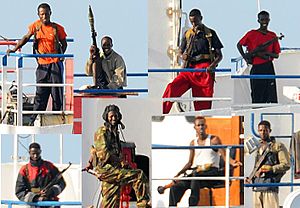
Here, some folks would probably say, "they'll get the pirates to take them!"--the much feared but never realized piracy-terrorism nexus. The pirates may be a lot of things, but dumb doesn't seem to be one of them, especially given their current run of success. They have a good thing going right now, and getting wrapped up with Shabab would be a great way to turn up the heat on themselves way more than they would want.

Second, while Shabab controls swaths of the south in Somalia, it seems to have been pretty unsuccessful in dislodging forces of the Transitional Federal Government (TFG) and its protectors, the African Union peacekeeping force AMISOM, from Mogadishu. Further, the rise of pro-government, moderate Islamic Sufi militias has slowed Shabab's roll to some extent as well. Why would you send valuable fighters across the sea when you haven't even established your caliphate in Somalia yet?

One other issue here, and this may have just been bad reporting by the Times, is that Shabab doesn't actually say in the article what they would be doing in Yemen. As Unleashing Chiang has pointed out before, there are a number of flashpoints in Yemen at the moment. One would assume that, given that Shabab is considered an "AQ affiliate," they would go there to assist AQAP, but maybe they mean the Houthis or the southerners. Or maybe Shabab doesn't really know what it's talking about and just wanted to gain some cache from the current media focus surrounding Yemen following the underwear bomber plot?

Which brings us to the second item in the Yem-Som saga:

Yemeni rebels have sent arms in the last few days to support Somalia's Islamist al Shabaab insurgents, the Somali defence minister said on Saturday...

"Yemeni rebels sent two boats loaded with military logistics, light weapons, Kalashnikovs and ammunition, and hand grenades -- which is fuelling the flames in a country already burning," Sheikh Yusuf Mohammad Siad told Reuters by phone.


The big problem with this article, and again, it could just be bad reporting by Reuters, is that it doesn't specify which "Yemeni rebels" we're talking about. I would assume AQAP, but there is more than one rebel group operating in Yemen. Further, who needs help here? Why is Shabab saying they're going to send help to Yemen when they, according to this article, seem to need help from Yemen. And, again, why would AQIP, who is currently under what seems to be fairly relentless attack from Sanaa (backed by the US) or the Houthis, who are at war with Sanaa backed by Riyadh, be worried about sending arms shipments to Somalia?

30 December 2009

Obscure War Blogging Part IV: Irish Civil War

For this week's installment, we move from a nationalist uprising in Northwest Africa to a war that was, to a certain extent, the remnant of a nationalist uprising in Europe.
While I'm not sure how obscure this war really is, I didn't know much about it, so it was obscure to me. Also, I watched The Wind That Shakes the Barley last night and wanted to learn more about what I watched.


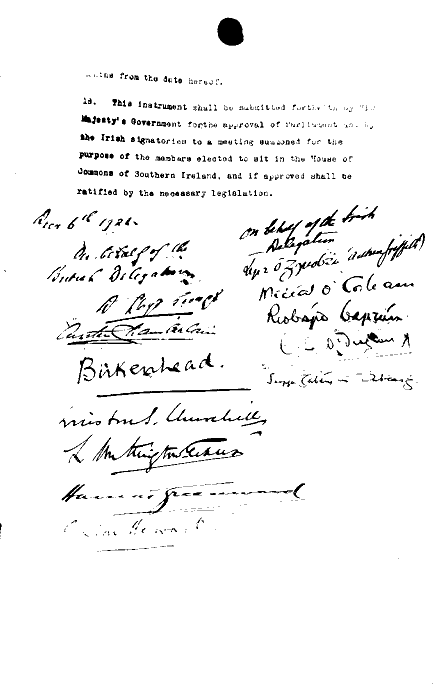
Who?: The forces of the Irish Free State (formed by the 1922 Anglo-Irish Treaty) versus anti-treaty Republican forces.

When?: 1922-23

Toll: Somewhere in the low thousands total battle deaths, with the Republicans taking the worst of it. Civilian casualties numbers don't seem to be available. The suffering here, though, was actually worse than in the War of Independence with England that preceded the Civil War.

Why?: The main point of dispute between the Free Staters and Republicans was the terms of the treaty that ended the Irish War of Independence. Basically, the Republicans, including Eamon de Valera, felt that the treaty did not go far enough. The Free State was still a British Dominion and its officials had to swear an oath to the British monarch. London also maintained the ability to veto laws passed by the new Free State parliament. The treaty's opponents wanted a clean break from Britain and the establishment of an Irish republic. They were also angry that Britain retained control over Northern Ireland (via a referendum).

The Free Staters, including the famous Michael Collins, were somewhat more pragmatic about the whole thing. They saw dominion status as a path to complete independence and recognized that Britain couldn't grant complete freedom to Ireland without throwing their whole international imperial project into crisis. Mostly, supporters of the treaty wanted an end to war with Britain. Unfortunately, the civil war that would ensue would actually be more destructive.

The first Free State elections were held in 1922, with parties supporting the treaty winning the majority of seats in the new parliament. The Free State government began building an actual state apparatus, including a military to replace the IRA (this refers to the Old IRA that existed prior to the split in 1969-70).

For its part, the IRA began to disintegrate into factionalism. The majority of its members (about 2 to 1), as might be expected, rejected the treaty and the establishment of the Free State. Clashes began to break out both within the IRA itself and between anti-treaty and pro-treaty forces.

One other element that some have argued fueled the Republican campaign--addressed somewhat in the movie I referred to earlier--was class resentment. The Republicans attacked and destroyed over 100 wealthy estates controlled mainly by Loyalist and Anglo-Irish landholders during the course of the war.

Outcome: Formal hostilities broke out when anti-treaty forces occupied the Four Courts and other buildings in Dublin in April of 1922, hoping to provoke a new war with Britain and unite the quarreling factions in the IRA. This was seen as a major test for Collins and the new Free State government. London placed heavy pressure on the government to do something, and even threatened to intervene itself. Eventually, Free State forces bombarded the buildings (with British artillery no less), forcing the surrender of Republican forces.

After securing Dublin, the Free State forces, their ranks quickly swelling (given fairly widespread public support) and armed to the teeth (courtesy of His Majesty's government) quickly took control of most of the major towns in Ireland. Republican forces were quite small and poorly armed and were, for the most part, routed in open conflict. As a result, they quickly converted to guerilla tactics.

While scoring some initial successes, including the assassination of Collins, the guerilla phase of the war was not much more successful for Republican forces. There was a brief period after the killing of Collins and the death of Arthur Griffith where it looked like the Free State might collapse, but they recovered and the guerillas were mostly routed and relegated to acts of sabotage within about 8 months. Anti-treaty forces were unable to wage a proper insurgency since their support among the population was minimal (the fact that the Free State was supported by the Catholic Church was another major negative for the Republicans). This limited both their sources of supplies and their recruiting base.

The Republican campaign petered out early 1923, with many of their leaders captured or killed. A ceasefire was declared in May. Free state parties won the national elections held soon after the war.

Who Cares?: I think one of the most interesting things about this conflict is that it makes it clear that liberation movements are not just about breaking away from the metropol, but that they also have to confront what kind of state they want to create in the wake of that liberation. The hardliners in the anti-treaty movement agreed with the Free Staters that England sucked, but they fundamentally disagreed on a) what Ireland should be once England was gone and b) how to get there.

The whole thing became rather moot by the 1930s, when the anti-treatier's goal of an independent republic was realized (although, of course, the question of Northern Ireland remained unresolved). This seems to vindicate the approach taken by the Free Staters. The likely result of a Republican victory would have probably been more war with Britain and delayed independence.


As with the American Civil War, the conflict cast a pall over Irish politics for decades. Most leading Irish politicians for the next several decades were veterans of the war and politics were basically polarized along the lines drawn during the war. In fact, Ireland's two main political parties, Fianna Fail and Fine Gael, are the direct descendants of the Republican and Free State factions during the war, respectively. One particular aspect of the war that created such social strife going forward were the relatively large number of executions, both formal and summary, of Republicans by the Free State government and Free State soldiers.

24 December 2009

Learning from Our Mistakes: Navigating Yemen

I'm gonna stick around the same region as yesterday for today's international security post...

Lots of news coming out Yemen recently as the US seems to be becoming drawn into that country to an increasing extent.--which is often lumped in with Somalia as something of a "future Af/Pak" region. Recent news reports have indicated that President Obama has personally issued orders for US forces to assist Yemeni forces with strikes and raids against the AQ-affiliate there, Islamic Jihad of Yemen. And today, news came out that a Yemeni air strike against that group may have killed the radical Yemeni cleric that the Fort Hood shooter, Nidal Hassan, was in contact with. In November, there were claims that the US signed a military agreement with Sanaa, but this wasn't confirmed by US government sources.

The beleaguered Saleh regime in Yemen may be in the most difficult position right now of any government in the world. It faces a 3-pronged attack:

1. The Houthi rebellion by members of the Zaidi sect of Shi'ism probably constitutes the biggest threat to the stability of the state right now. Recently, Saudi Arabia seems to have stepped in to support the Saleh regime against the Houthis, even by conducting air strikes across the border.

2. The periodic push for secession by southerners has re-ignited recently--South Yemen was formerly the only Marxist republic in the Middle East prior to reunification in 1990, followed by a brief civil war in '94. This has not devolved into armed conflict, but secessionist rallies have seen violence by state security forces.

3. The ongoing efforts of Islamic Jihad in Yemen.

Yesterday's post outlined 3 major lessons from US policy failures in East Africa:

the War on Terror mentality, the Bush Administration's "with us our against us" mentality, and the too-close relationship with Ethiopia


How can we apply these to the situation in Yemen in order to avoid creating the kinds of problems we have in East Africa? Some thoughts...

the War on Terror mentality, the Bush Administration's "with us our against us" mentality


With respect to this issue, I think it is best that the US needs to a) work with Sanaa only to the extent to which our interests coincide and b) realize that Yemen needs us way more than we need Yemen. As far as coinciding interests, of the three big threats to Sanaa, the only one that seems to be of any concern to the US is the third--the AQ-affiliate operating there. I don't see any compelling reason why we would need to help fight the Houthis or help Sanaa suppress the southern unrest. This would mean any assistance provided to the Yemeni forces should be clearly targeted toward the fight against Islamic Jihad in Yemen, if possible. Second, we have to realize that any one of these threats is a way bigger danger to the Saleh regime than to the US and our allies. To often we have let small client states hold our policies hostage because we inflate the dangers of these sort of things.

the too-close relationship with Ethiopia


I think either Sanaa or Riyadh could stand in for Ethiopia here. Just because Yemen is cooperating with us, as did Ethiopia, is no reason to unconditionally support all of their policies. The Saleh regime isn't particularly democratic or humane. We can leverage our assistance to try to improve this, but, again, there is no compelling reason to support the campaign against the Houthis or the southerners. And the Saudis may be important strategic allies, but our security and economic relationship doesn't mean we have to support their meddling in northern Yemen.

08 December 2009

Renewed North-South Civil War in Sudan Slated for 2011


Take it to the bank.

Sudan already has huge problems. The lingering effects of genocide and insurgency in Darfur. Incursions by the batcrap crazy Ugandan Lord's Resistance Army into the south. Ethnic violence and raids in the south. Now, it look's like a renewed civil war between the northern Muslim-dominated government and breakaway Christian south is likely in the near future.

The festering turd of a government in Khartoum recently showed its hand by rounding up southern politicians from the southern SPLM (the political wing of the Sudan People's Liberation Army--the north's opponent in the civil war, and the junior partner in the current Sudanese ruling coalition) at an anti-government rally in the capital.

A referendum on creating an independent South Sudan is slated for the summer of 2011, but it is becoming increasingly clear that the government in Khartoum doesn't intend to hold anything resembling a fair election.

For its part, the south is also preparing for war. Satellite imagery and a freight manifest have demonstrated that a freighter captured by Somali pirates last fall and subsequently released was filled with tanks, RPGs, & AA guns headed for the Autonomous Government of South Sudan (via Kenya, who seems to be the GOSS's patron here).

War will (once again) hit Sudan before we know it. Some sort of diplomatic or even military intervention by the international community seems to be the only possible way to avoid this. Is that a good idea? I dunno...